Reclaiming the Foundations

I am a Ph.D. student exploring Embodied Intelligence. I write about Math, CS, AI and my views on them.
We are living in an unusual moment in the history of Artificial Intelligence (AI). Neural networks with billions of parameters write text, generate images, and reason in ways that would have appeared almost mystical a decade ago. Courses, tutorials, and social media threads on machine learning and generative models are everywhere. Yet, beneath this abundance lies a quiet absence. The foundational ideas of AI, the ideas that predate deep learning in many ways make sense of it, are rarely discussed with the same enthusiasm and seriousness.
This blog series is motivated by that gap.
AI did not begin with gradient descent on GPUs. It began with questions that are older than computers themselves. What does it mean to reason? How should an agent act under uncertainty? How can symbols, knowledge, and goals be represented in a machine? These questions form the core of traditional AI, and they remain unresolved even today. This series is an attempt to return to these questions with mathematical precision, historical context, and hands on experimentation.
The primary inspiration for these writings is the classical framework laid out in Artificial Intelligence: A Modern Approach by Stuart Russel and Peter Norvig. Not as a textbook summary, but as a scaffold. We will reconstruct ideas, challenge assumptions, and implement algorithms from first principles. The goal is not nostalgia. The goal is clarity.

What This Series Will Cover?
This series will systematically explore the foundations of Artificial Intelligence as a science of rational agents.
We will begin with problem formulation and search. Uninformed search, heuristic search, and optimality criteria will be derived mathematically and implemented algorithmically. We will move to adversarial reasoning through games, introducing minimax, alpha-beta pruning, and their limitations in real physical systems.
Uncertainty will then take center stage. Probabilistic reasoning, Bayesian networks, Markov Decision Processes, and partially observable models will be developed carefully. These are not peripheral topics. They are mathematically language of decision making under incomplete information.
Logical reasoning and knowledge representation will follow. Propositional logic, first order logic, inference, and planning will be treated not as symbolic relics but as computational tools with explicit assumptions and failure modes.
Throughout the series, examples will be grounded in embodied settings. Robotics navigating environments, manipulators planning actions, agents making decisions under physical constraints. Abstractions will always be tied back to computation.
A Non-Linear History of AI
Let us begin in the present.
A modern language model predicts the next token by minimizing cross entropy loss. Its success is empirical, statistical, and undeniable. Yet, when asked why it chose a particular action or how it plans over long horizons, the answers become opaque. The model correlates, but it does not explicitly deliberate.
Now jump back to 1956.
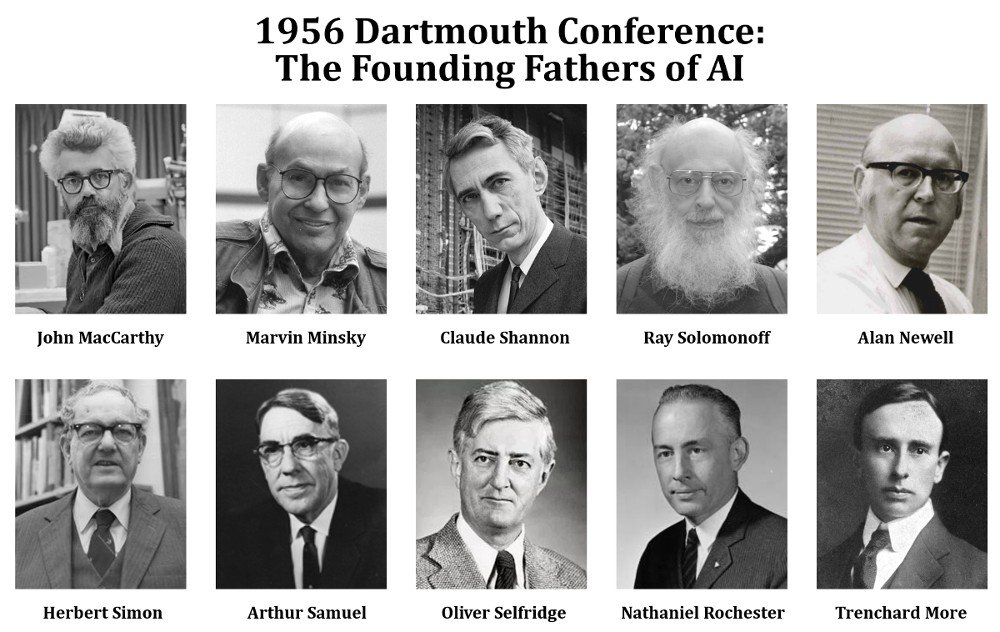
At the Dartmouth workshop, John McCarthy coins the term Artificial Intelligence. The optimism is radical. Intelligence is not pattern matching. It is reasoning, planning, and abstraction. Early programs like the Logic Theorist prove mathematical theorems not by learning from data, but by searching through symbolic spaces.
Jump forward again.
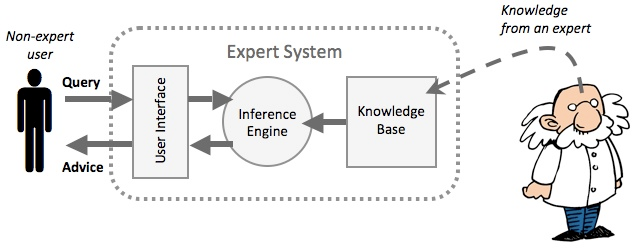
In the 1980s, expert systems dominate industry. Knowledge is encoded as rules. If this then that. Systems perform well in narrow domains but collapse under uncertainty and scale. The critique is harsh. Knowledge engineering is brittle. Data-driven methods appear more promising.
Jump backward.
In 1943, McCulloch and Pitts propose a mathematical model of a neuron. THis is often cited as the birth of neural networks. Yet even here, the neuron is a logical device. It computes a Boolean function. Learning comes later. Logic and computation are intertwined from the very beginning.
![The McCulloch-Pitts neuron - Artificial Intelligence By Example [Book]](https://www.oreilly.com/api/v2/epubs/urn:orm:book:9781788990547/files/assets/36bb334b-4393-4c4c-82a8-ecac23d4ac70.png)
Return to the present.
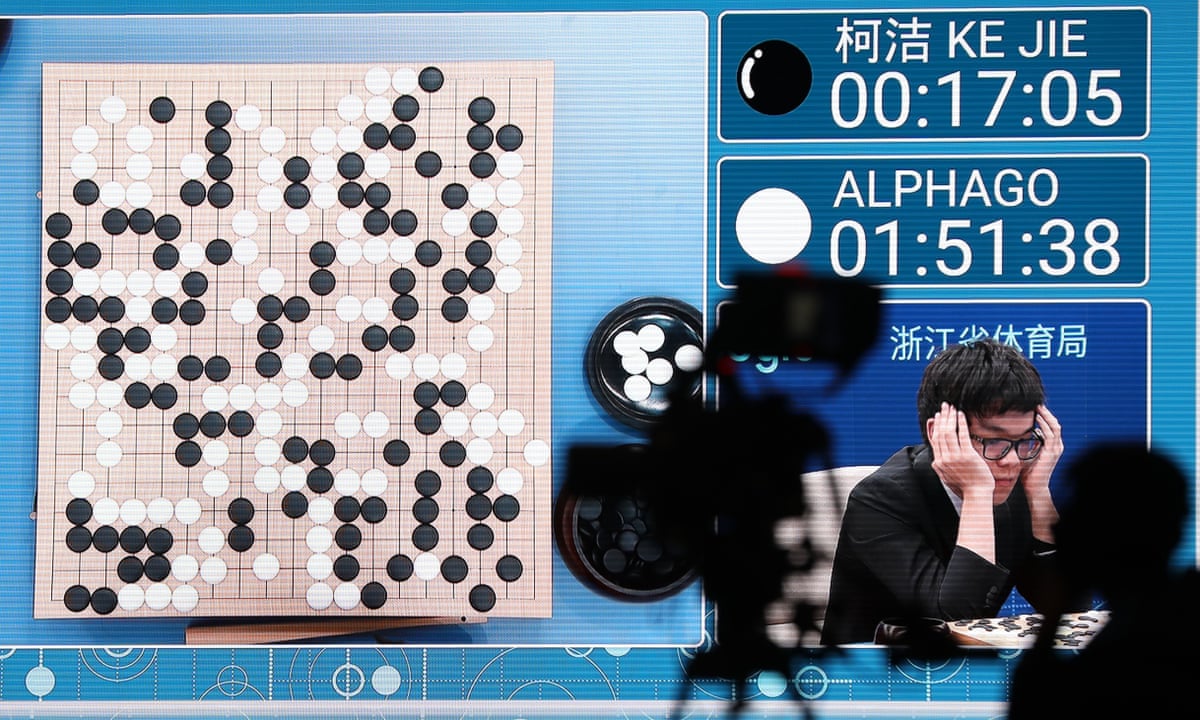
Reinforcement learning agents master games and control robots. At their core lie Markov Decision Processes, Bellman Equations, and Dynamic Programming. These are not deep learning inventions. They were formalized in the mid 20th century. Deep networks approximate value functions. The structure of the problem is classical AI.
Jump again.
In 1961, Shakey the robot navigates rooms using symbolic planning and perception. It fails often. Sensors are noisy. The world is continuous. The lesson is not that symbolic AI was wrong, but that intelligence requires uncertainty, feedback, and embodiment.
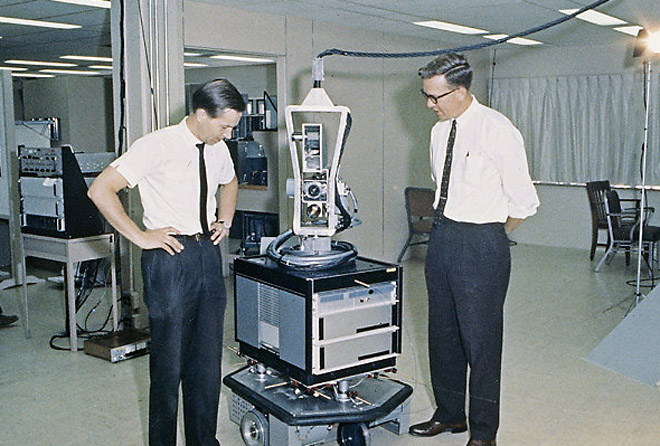
This non-linear history reveals a pattern. Ideas disappear not because they are false, but because they are temporarily inconvenient. They return when scale and computation catch up.
Why Traditional AI Still Matters?
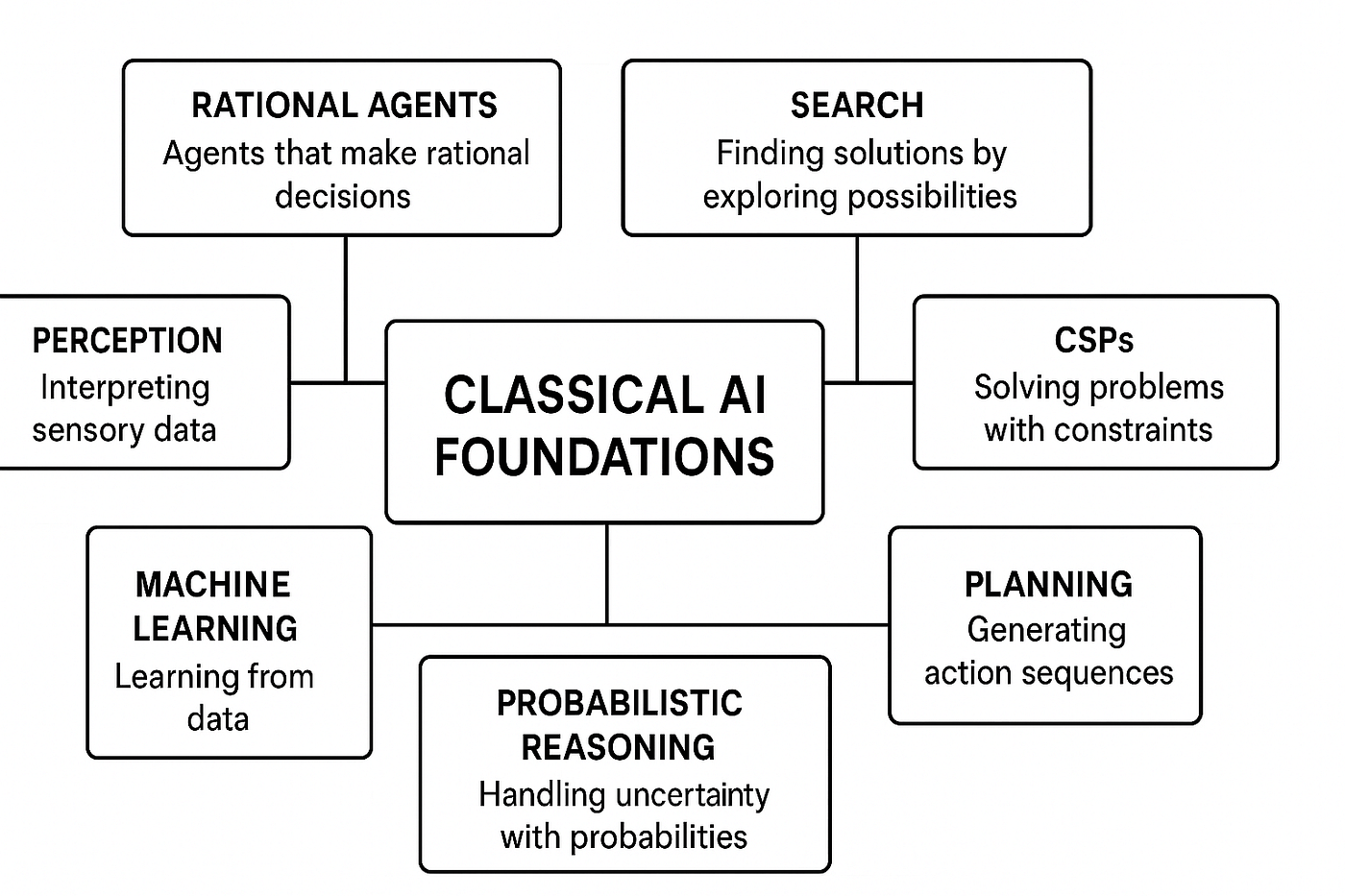
Traditional AI provides something that modern data-driven approaches often lack: Explicit structure.
Search algorithms tell us why a solution is optimal. Probabilistic models tell us how uncertainty propagates. Logical systems tell us what assumptions are being made. Planning algorithms tell us how goals decompose into actions.
In most the fields, these properties are not optional. An agent must act safely, explain decisions, and generalize beyond its training distribution. Purely statistical systems struggle here. Classical AI provides the language to reason about these constraints.
Even large language models implicitly rely on classical ideas. Attention is structured memory. Prompting is a form of goal specification. Tool use resembles planning. Retrieval Augmented Generation is explicit search.
Ignoring traditional AI does not make systems more modern. It makes them less understood.
How to Read This Series?
This series is written for readers who are willing to slow down. Equations will appear frequently. Proof sketches will be included. Code will be minimal. Assumption will be stated clearly.
You are encouraged to implement everything. Modify it. Break it. Observe where theory meets reality.
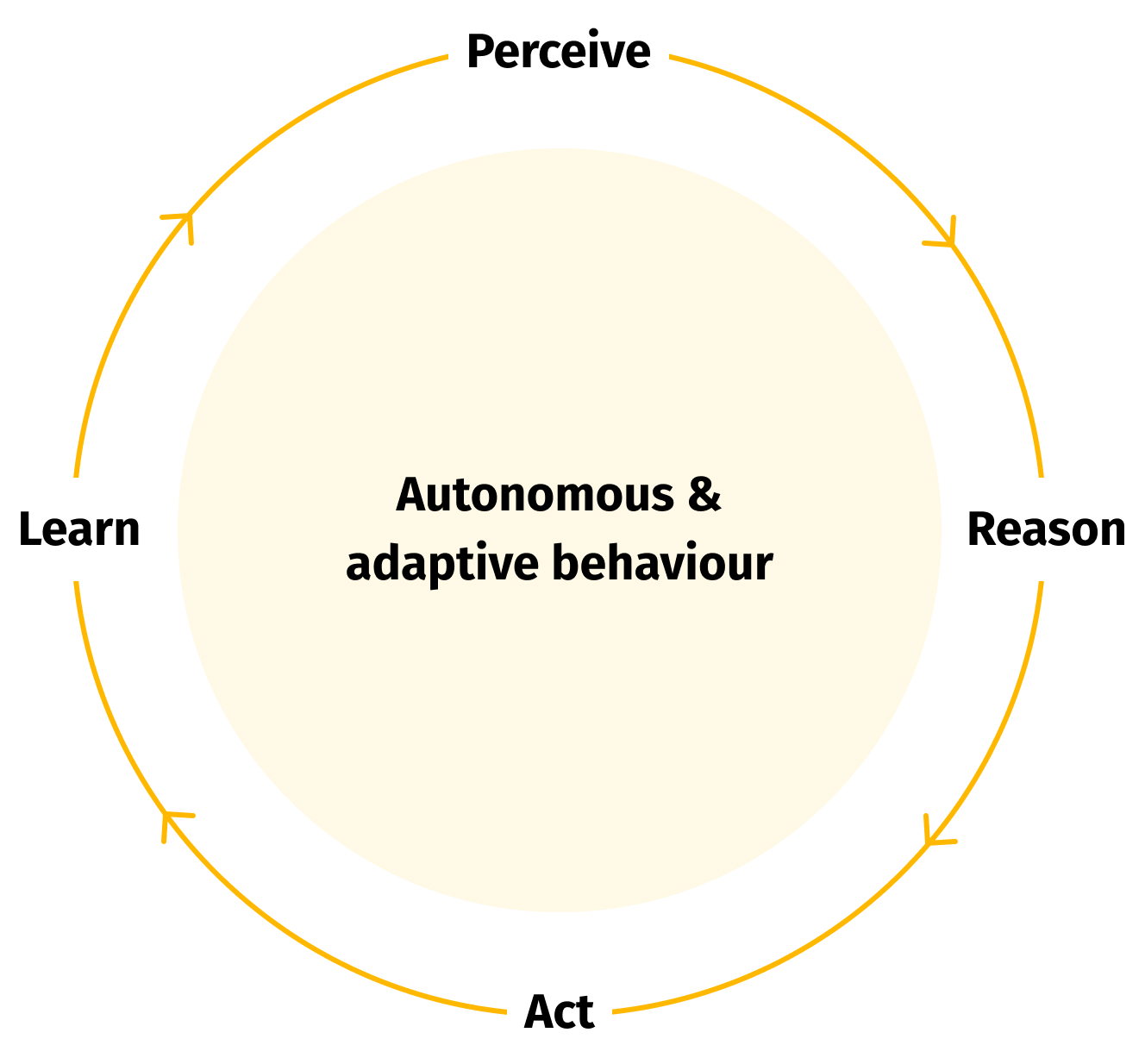
Artificial Intelligence is not a collection of tricks. It is a discipline concerned with rationality under constraints.
Closing Perspective
Artificial Intelligence advances not by forgetting its past, but by reinterpreting it under new computational regimes. By revisiting search, logic, probability, and planning, we are not stepping backward. We are strengthening the conceptual foundations on which modern systems stand. Understanding these foundations is not a detour from progress. It is the shortest path to building machines that reason, act, and adapt in the real world.